
NEWS
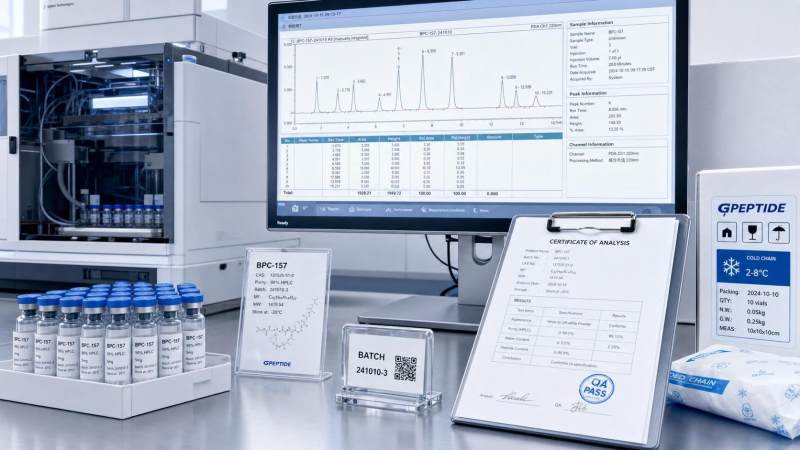
In the realms of life sciences research and premium industrial raw material development, the structural complexity of peptides demands exceptional technical expertise from manufacturers. For global procurement managers and research institutions, partnering with a technologically advanced custom peptide factory is critical to ensuring the seamless progression of their projects. But what specific technical capabilities define a truly advanced peptide manufacturing facility?
1. Mastery over Long-Chain Synthesis and Complex Sequences
Standard peptide synthesis is often limited to short chains or conventional sequences. However, when faced with complex peptides containing highly hydrophobic regions, multiple disulfide bonds, or severe steric hindrance, the synthetic difficulty escalates exponentially. An advanced peptide factory must possess mature expertise across Solid-Phase Peptide Synthesis (SPPS), Liquid-Phase Peptide Synthesis (LPPS), and fragment condensation strategies. Backed by profound chemical insights, their technical teams can design viable synthetic routes that overcome steric and solubility barriers, ensuring the successful delivery of challenging sequences.
2. Diversified Modification and Labeling Expertise
Structural modification is frequently required to enhance the stability, bioavailability, or tracking capabilities of a peptide in specific applications. A premier manufacturing facility should offer a comprehensive suite of modification services. These include, but are not limited to, phosphorylation, methylation, acetylation, biotinylation, fluorescent labeling (such as FITC and FAM), cyclization (disulfide and amide bridging), and PEGylation. This level of precision modification supports diverse applications spanning from diagnostic assay development to specialized cosmetic and industrial formulations.
3. Large-Scale Purification and High-Resolution Analytical Platforms
Synthesis is merely the first step; achieving high purity at scale is where true technical capability is proven. An advanced factory must be equipped with industrial-grade High-Performance Liquid Chromatography (HPLC) purification systems capable of efficiently separating target peptides from closely related impurities. Furthermore, the facility must maintain an rigorous quality control laboratory utilizing Liquid Chromatography-Mass Spectrometry (LC-MS) and analytical HPLC to provide transparent traceability and guarantee batch-to-batch consistency.
4. Scalable Production Engineering from Bench to Pilot
A technically proficient factory bridges the gap between small-scale laboratory discovery and industrial-scale supply. The engineering team must be capable of optimizing process chemistry early on to reduce solvent consumption, minimize side reactions, and establish robust, reproducible protocols. This ensures that when a project transitions from milligrams to kilograms, the scale-up process is economically viable, safe, and entirely seamless.