
In the fields of biopharmaceuticals, cosmetic ingredients, and chemical synthesis, peptide research and product development are often associated with high synthesis expenditures and extended testing cycles. As market competition intensifies, optimizing R&D and manufacturing budgets while maintaining high product quality has become a critical objective for companies worldwide. Modern source peptide factories are helping clients optimize their R&D costs and enhance overall operational efficiency through a series of process innovations and technical advancements.
1. Automation and High-Throughput Synthesis Technologies
Traditional peptide synthesis relies heavily on manual procedures, which can lead to lower throughput and a higher likelihood of operational variance. Advanced peptide manufacturing facilities integrate high-throughput automated Solid-Phase Peptide Synthesis (SPPS) platforms capable of synthesizing multiple sequences simultaneously. Automation significantly boosts reaction yields and batch-to-batch repeatability, dramatically shortening pilot-scale development cycles and reducing both time-to-market and financial expenditure for clients.
2. Green Chemistry and Efficient Reagents Reducing Raw Material Consumption
Peptide synthesis historically requires substantial volumes of reagents and solvents. Innovative peptide manufacturers adopt green chemistry approaches, utilizing highly efficient coupling reagents, optimized solid supports, and solvent recovery systems. By reducing the consumption of expensive raw materials and minimizing waste management overhead, these technology updates help keep single-batch production costs manageable.
3. Upgraded Purification Technologies Improving Product Yields
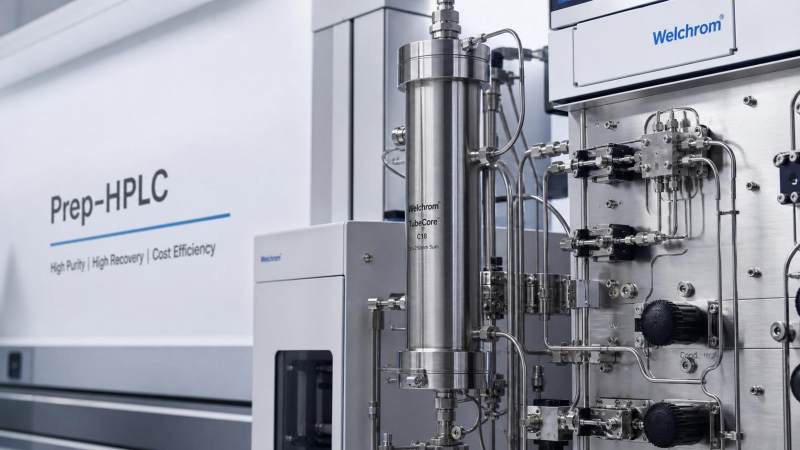
During peptide manufacturing, purification via Preparative High-Performance Liquid Chromatography (Prep-HPLC) significantly influences total cost structure. Forward-thinking manufacturers deploy high-resolution stationary phases and continuous purification processes to enhance separation efficiency and recovery yields of target peptides. Higher purification yields mean less crude peptide is required to achieve target quantities, yielding direct material cost savings for clients.
4. Precise In-Process Control (IPC) Minimizing Trial-and-Error Expenses
Leading peptide facilities incorporate real-time Liquid Chromatography-Mass Spectrometry (LC-MS) analytical monitoring across synthesis workflows. By tracking reaction intermediates in real time, technical teams can identify and resolve process anomalies early, preventing batch rejections and drastically reducing trial-and-error costs during scale-up.
By combining automated synthesis platforms, green process chemistry, advanced purification technologies, and rigorous in-process analytics, professional peptide manufacturers serve as technical partners. They help global clients control operational costs, mitigate development risks, and accelerate product commercialization.