
NEWS
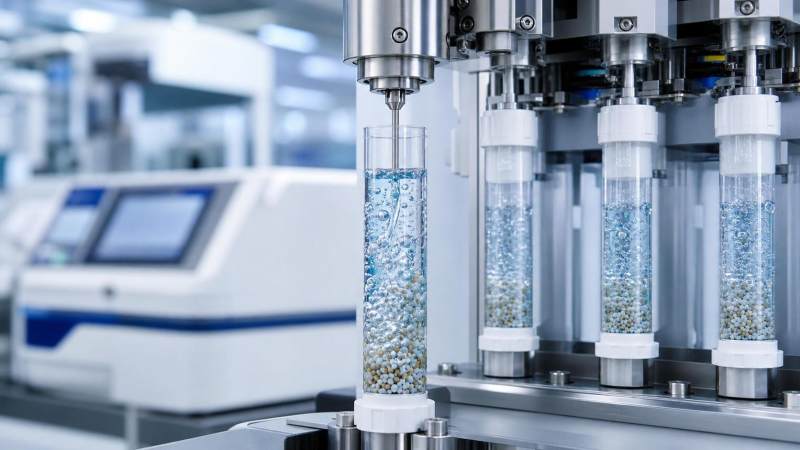
In peptide research and industrial applications, batch-to-batch consistency and synthesis stability are crucial metrics for evaluating a supplier’s capabilities. Given the complex molecular structures and lengthy reaction sequences inherent in peptide chemistry, minor process variations can impact final purity and yield. How do professional peptide manufacturing facilities establish robust technical frameworks and quality management systems to guarantee high stability in peptide synthesis?
1. Standardized Automated Solid-Phase Peptide Synthesis (SPPS)
High stability stems from standardized manufacturing processes. Professional peptide facilities utilize fully automated Solid-Phase Peptide Synthesis (SPPS) systems to program every operational step, including amino acid coupling, deprotection, and washing stages. By controlling reaction temperatures, stirring speeds, and reagent volume delivery, automation eliminates human error and guarantees consistent synthesis trajectories across different batches.
2. Rigorous Raw Material Inspection and Supply Chain Control
Stable synthesis relies on high-quality starting materials. Compliant peptide manufacturers enforce strict qualification criteria for incoming protected amino acids, resins, and coupling reagents. Using High-Performance Liquid Chromatography (HPLC) and Mass Spectrometry (MS) to verify purity and impurity profiles batch by batch, factories prevent synthesis anomalies driven by raw material fluctuations at the source.
3. Real-Time In-Process Control (IPC) and Parameter Monitoring
In-Process Control (IPC) serves as a vital safeguard against quality deviations during synthesis and purification. Automated sensors and sampling protocols monitor critical steps, such as resin cleavage, crude purification, and lyophilization. Analyzing intermediate purity and reaction yield in real time enables early detection of process drift, allowing technical teams to make immediate corrections.
4. Comprehensive Quality Control and Controlled Processing Environments
Peptide molecules are often sensitive to environmental factors like temperature and moisture. Professional manufacturing sites operate compliant cleanroom facilities and low-temperature storage infrastructure. Equipped with advanced analytical instruments including HPLC and LC-MS, these facilities issue comprehensive Certificates of Analysis (COA) for every produced lot.
By integrating automated execution, raw material verification, in-process monitoring, and standardized quality management, professional peptide factories deliver reliable, well-characterized peptide synthesis services to support research and industrial projects globally.